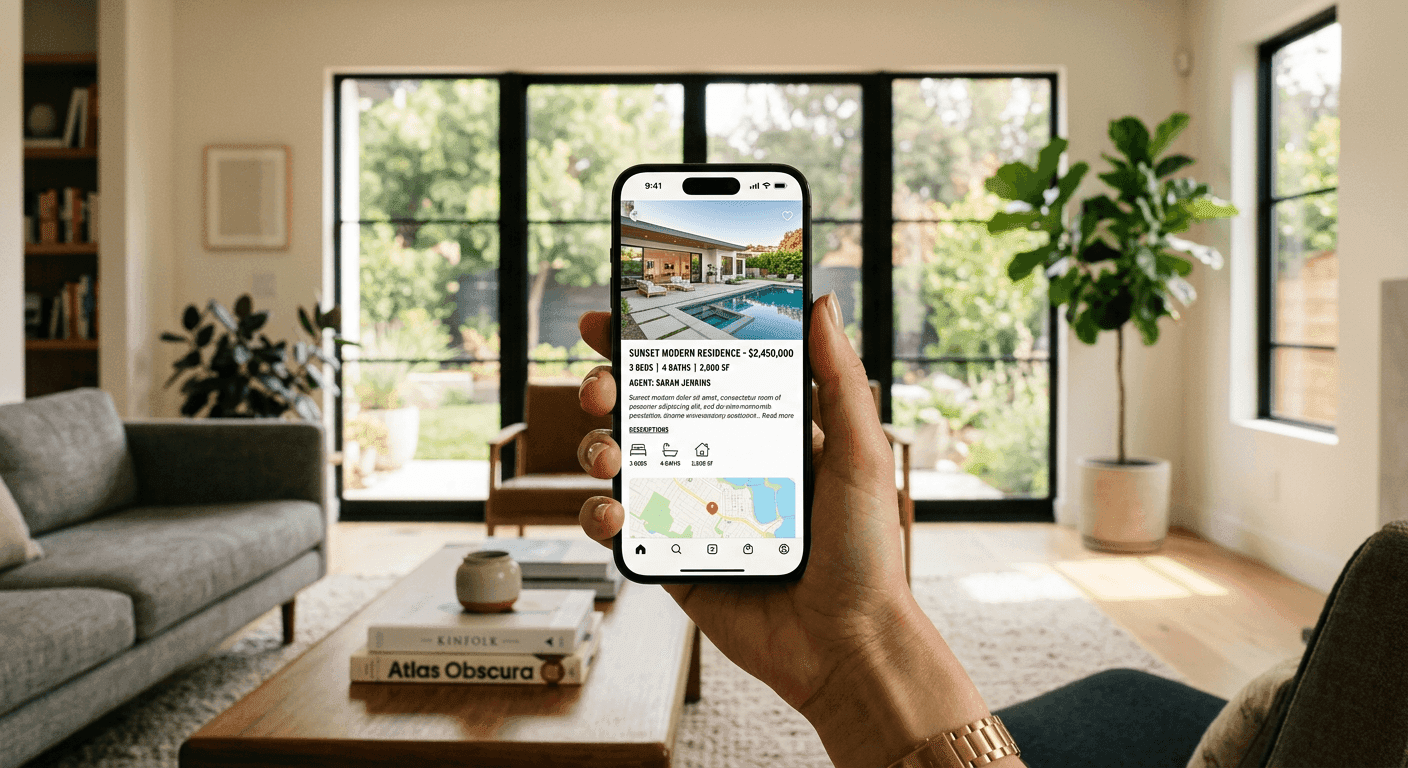
Win High-End Sellers with AI Listing Presentations


High-end sellers are not just hiring you to set a price. They are evaluating your command of the market, your discretion, your marketing strategy, your confidence, and your ability to tell the story of a remarkable property. The listing appointment is an audition, and the bar is high.
Many agents have deep local knowledge but lose hours assembling property details, CMA talking points, marketing ideas, seller objections, and launch logistics into one cohesive presentation. That is where AI for luxury listing presentation prep can help. Used well, it lets you arrive more organized, more strategic, and more polished, without sounding automated.
In this guide, you will learn how to use AI to organize seller intake and property details, strengthen your pricing conversation, sharpen positioning and marketing narratives, prepare for private tours and objections, coordinate a launch, and protect accuracy and Fair Housing compliance throughout.
One caveat before we begin. Laws, commission practices, MLS rules, advertising requirements, and agency disclosures vary by state, market, MLS, and brokerage. This article is not legal, tax, or financial advice.
Understand the Expectations of Luxury Sellers
A luxury listing appointment demands more preparation than a standard one. Affluent sellers are often comparing agents across several dimensions at once: market expertise and pricing judgment, confidence without overpromising, discretion and privacy controls, the quality of marketing assets, reach to qualified buyers, and the ability to manage complexity, vendors, timing, and negotiations.
Presentation quality matters to these clients, but the winning presentation is grounded in strategy rather than flash. Polish gets attention. Substance earns the listing.
It also helps to remember that luxury is market-relative. A million-dollar listing may be entry-level luxury in one metro and ultra-premium in another. Realtor.com places the national entry-level luxury benchmark around $1.19 million and the ultra-luxury threshold around $5.64 million. Those numbers vary widely by market, which is exactly why you must localize pricing and positioning rather than rely on generic luxury assumptions.
What High-End Clients Want to See
When you sit down with a luxury seller, they are looking for a clear read on current demand and competition. They want a confident explanation of the likely target buyer, described without violating Fair Housing rules. They expect a property-specific positioning strategy, not a recycled template.
They also want a premium but realistic launch plan, supported by examples of marketing quality across photography, video, print, digital, email, private outreach, the broker network, and the showing experience itself. Finally, they want clear next steps and decision points so they know exactly what happens after they say yes.
Where AI Can Support the Agent
AI is most valuable as a preparation and organization assistant. It can help you summarize intake notes, organize property features, draft presentation outlines, generate responses to seller objections, brainstorm marketing angles, create showing talking points, and build checklists and launch timelines.
What it cannot do is just as important. AI cannot verify the MLS, supply local pricing expertise, know off-market activity, exercise ethical judgment, handle brokerage compliance, or build the trust that comes from real relationships. Used correctly, AI luxury real estate listing prep can help agents arrive more organized without making the presentation feel automated.
Build a Stronger Property and Seller Profile
The quality of any AI output depends entirely on the quality of what you put in. Luxury positioning should begin with both property facts and seller motivations. A useful discipline is to separate verified facts from impressions, assumptions, and marketing ideas before you prompt anything.
Key Information to Gather Before Using AI
Before you involve AI, assemble the following:
- MLS history and prior listing remarks
- Tax records and other property records
- Square footage, lot size, bedrooms, baths, parking, and parcel details
- Architectural style and design pedigree
- Major renovations, permits, warranties, and system upgrades
- Amenities such as kitchen, baths, outdoor living, pool, spa, guest house, wine cellar, gym, theater, smart home, security, and wellness features
- Setting features such as views, privacy, acreage, waterfront, golf course, equestrian, ski, beach, or urban lifestyle
- HOA, association, club, building, or community details
- Nearby amenities and location advantages
- Seller goals, timeline, privacy preferences, pricing expectations, and concerns
- Known disclosure issues, repairs, exclusions, leased systems, and personal property considerations
Turning Raw Details Into Strategic Positioning
Once you have verified inputs, you can prompt AI to identify the property's strongest differentiators, likely lifestyle themes, probable buyer motivations, potential weaknesses to address before launch, and supporting presentation talking points.
Common positioning themes for high-end homes include architectural significance, resort-style living, privacy and security, entertaining and indoor-outdoor flow, multigenerational living, and proximity to lifestyle amenities. Whatever themes you choose, the positioning must be truthful, supportable, and refined by you. AI can suggest a frame, but you decide whether it fits the home and the market.
Improve the Luxury CMA and Pricing Conversation
Luxury comparative market analyses are often harder to build than standard ones. Comparable sales may be limited, unusual, dated, or difficult to adjust. Strong agents pull from MLS data, public records, pending sales where allowed, withdrawn and expired listings, competing inventory, days on market, price reductions, buyer feedback, and hyperlocal absorption trends.
AI can help summarize that data, organize comparable themes, and prepare plain-language explanations for the seller. It should never be treated as an automated valuation authority.
The market context matters here too. Realtor.com reports that national luxury pricing has stabilized rather than surged, with the 90th-percentile luxury threshold down only slightly year over year. That stability is a useful talking point. It supports a conversation focused on current absorption, buyer selectivity, and competitive positioning rather than broad optimism about ever-rising prices.
What AI Can and Cannot Do With Pricing
AI can help you summarize differences between comparable sales, draft pricing explanations in seller-friendly language, anticipate seller questions, create talking points for different price tiers, and compare the risks of aspirational pricing versus market-aligned pricing.
It cannot reliably verify MLS accuracy, know every off-market conversation, interpret condition from photos alone, replace appraisal methodology, determine market value without your review, or understand local buyer psychology without your context.
One firm caution: never paste confidential seller information, nonpublic MLS data, or private client details into any tool unless your brokerage, MLS, and privacy policies clearly permit it.
Preparing for Seller Pushback
Luxury sellers tend to push back in predictable ways. You will hear versions of these:
- "Our property is better than the comps."
- "We are not in a rush."
- "Let's test the market higher."
- "Another agent said they could get more."
- "There aren't any true comps."
AI can help you prepare calm, evidence-based responses, model alternative pricing scenarios, explain the risks of overpricing, and draft scripts that preserve rapport. It can also generate visual talking points for your presentation slides.
The strongest approach is to present pricing as a strategy, not just a number. Lay out the launch price, a defined review period, feedback milestones, and a clear adjustment plan if activity does not meet expectations. That framework shifts the conversation from one figure to a shared plan.
Create a More Persuasive Listing Presentation
The best luxury listing presentations connect the seller's goals to a specific go-to-market plan. AI can help you organize that story, but you should always edit for tone, local nuance, and authenticity. Avoid generic claims such as "unmatched," "best," or "one-of-a-kind" unless they are genuinely supportable.
Suggested Presentation Flow
A clean, logical flow keeps the seller with you. Consider this sequence:
- Seller goals and priorities recap
- Market overview and luxury buyer context
- Property positioning and differentiators
- Comparable sales and active competition
- Pricing strategy and launch scenarios
- Preparation recommendations before going live
- Marketing strategy and media plan
- Showing strategy and access plan
- Communication cadence and reporting
- Timeline, listing agreement discussion, and next steps
AI can help draft slide titles, summarize each section, and create speaker notes you can deliver naturally. Keep the presentation concise, visual, and specific to the seller in front of you.
Tailoring the Message to the Seller
Sellers process information differently, and your delivery should adjust accordingly. Analytical sellers want data, charts, absorption figures, and clear pricing logic. Emotional sellers want respect for the home's story and the personal investment they have made. Privacy-focused sellers want discretion, access controls, and qualified showings. Time-sensitive sellers want a clear launch calendar and a decision framework.
A practical prompt concept: ask AI to rewrite the same pricing explanation three ways, once for an analytical seller, once for a privacy-focused seller, and once for a seller concerned about timing. Then pick and refine the version that fits. Just remember not to manipulate, overpromise, or obscure material market realities in any version.
Develop a Premium Property Marketing Strategy
Luxury marketing should be strategic, not just expensive. AI can help you brainstorm and organize, but final copy and creative direction should reflect the property, the market, your brokerage standards, and compliance requirements. Luxury property marketing AI workflows are most useful when they start with verified property details and end with human editing.
Listing Copy and Lifestyle Storytelling
AI can assist with drafting MLS remarks within character limits, creating long-form property descriptions, writing brochure copy, developing email copy, drafting social captions, and creating alternate versions for different channels.
Effective luxury copy emphasizes architecture, materials and finishes, design intent, views and setting, entertaining spaces, privacy, wellness and convenience, and indoor-outdoor living. It avoids unsupported superlatives, fabricated design claims, vague "luxury lifestyle" filler, any reference to protected classes, and claims about schools, zoning, or square footage that have not been verified.
Visual and Content Planning
AI can help you build the creative plan as well. Use it to draft photography shot lists, video storyboard concepts, drone shot priorities where legal and appropriate, twilight shoot recommendations, detail-shot lists for finishes and amenities, social content themes, email campaign angles, print collateral sections, and private tour talking points.
A useful set of visual categories includes:
- Arrival and curb appeal
- Main living spaces
- Kitchen and entertaining areas
- Primary suite
- Outdoor living
- Amenities and specialty rooms
- Views and setting
- Neighborhood or lifestyle context, where appropriate and compliant
Audience and Channel Strategy
AI can help map marketing channels to likely buyer motivations, such as relocation, second-home use, lifestyle amenities, privacy, investment utility, or proximity to business hubs. Potential channels include the MLS and syndication, the brokerage network, agent-to-agent outreach, email campaigns, private client lists where permitted, social media, print collateral, digital advertising that complies with Fair Housing rules, and broker opens or invitation-only previews.
Fair Housing care is essential here. Avoid "ideal buyer" language tied to protected characteristics, and never use AI to create discriminatory targeting parameters. Review all ad copy and audience strategy under HUD, NAR, brokerage, platform, and state rules.
Prepare for Showings, Open Houses, and Private Tours
Luxury showings often require choreography: arrival sequence, lighting, access, security, music, staging, staff coordination, and seller privacy. AI can help you prepare narratives and logistics, but you must ensure the experience feels personal rather than scripted.
Property Talking Points
Create concise feature-benefit notes for everyone who may represent the property, including the listing agent, any co-listing agent, a showing assistant, team members, relocation contacts, and broker preview hosts.
A simple structure keeps these notes useful:
- Feature: "Floor-to-ceiling glass along the main living area"
- Benefit: "Frames the western view and supports indoor-outdoor entertaining"
- Detail: "Recently updated automated shade system, per seller"
Pull these into a single one-page internal showing brief so everyone tells the same story.
Buyer Questions to Anticipate
Use AI to brainstorm the questions serious buyers are likely to ask. Expect interest in renovations and permits; roof, HVAC, electrical, plumbing, pool, elevator, smart home, and security systems; HOA or building rules; privacy and access; utility costs and maintenance; insurance considerations; and any flood, fire, coastal, or hillside issues where relevant. Buyers also ask about furnishings, art, exclusions, and negotiable personal property, plus neighborhood amenities and commute patterns.
Every answer must be verified before it is shared. A confident but incorrect response can cost you credibility and create real liability.
Use AI to Manage Listing Launch Details
Luxury launches often involve more vendors, more approvals, longer asset timelines, and higher seller expectations than standard listings. AI can act as a planning assistant for checklists, timelines, email drafts, and role assignments. High-end listing AI tools can be useful for organizing deadlines, but the agent or listing coordinator should own final accountability.
Pre-Launch Checklist
Build your checklist around these categories:
- Listing agreement and agency disclosures
- Seller disclosures and required forms
- MLS rules and input requirements
- Property records and measurement verification
- Repairs and maintenance
- Deep cleaning and window cleaning
- Landscaping and exterior preparation
- Staging and styling
- Photography, video, drone, floor plan, and 3D tour
- Copywriting and collateral review
- Showing instructions and access controls
- Security and valuables plan
- Signage, lockbox, gate access, and concierge or building coordination
- Marketing asset deadlines
- Seller review and approval process
- Launch date and contingency plan
Team and Vendor Coordination
AI can help draft vendor task lists, timeline templates, internal responsibility charts, seller update emails, photography-day instructions, and showing-prep checklists. Assign an owner and a due date to every task so nothing slips.
Be careful with sensitive data. Avoid entering private access codes, alarm details, seller travel plans, financial details, or personal data into AI systems unless your policy clearly approves it.
Protect Accuracy, Compliance, and Client Trust
AI-generated content can sound polished even when it is inaccurate. That is precisely the risk for luxury listings, where reputational stakes are high. You remain responsible for advertising, representations, disclosures, MLS input, and client communication. Brokerage policy, MLS rules, state law, and federal Fair Housing requirements must guide how you use these tools.
The Fair Housing Act, as explained by HUD, makes clear that housing providers and agents cannot make statements or use advertising that indicate a preference, limitation, or discrimination based on protected characteristics. That applies directly to AI-generated property descriptions and audience targeting. NAR's Fair Housing guidance reinforces the point, warning that listing remarks, targeted marketing, and language describing an ideal buyer can all create Fair Housing risk and require careful review.
Verify Every Claim
Before anything goes public, verify the details that matter:
- Square footage and lot size
- Bedroom and bathroom count
- School information
- Zoning and permitted uses
- Views
- Waterfront, beach, golf, or club access
- Renovation dates and permits
- HOA or building rules
- Taxes and assessments
- Rental restrictions
- Smart home, security, energy, or wellness features
- Branded appliances, materials, architects, designers, or builders
If a claim cannot be verified, soften it, attribute it, remove it, or review it with your broker or the appropriate professional.
Avoid Common AI Mistakes
Watch for fabricated market insights, overstated features, misleading buyer persona language, Fair Housing issues, privacy violations, copyright concerns, generic luxury clichés, inconsistent claims across the MLS, brochure, website, and social media, and any unapproved use of MLS or client data. For AI for million dollar listing strategy, the safest approach is to treat every AI output as a draft that requires verification, editing, and compliance review.
Practical AI Workflow for Your Next Luxury Listing
Here is a simple, repeatable process you can use from intake to presentation day. It works for solo agents, teams, and brokerage staff alike.
Step 1: Gather Verified Inputs
Pull together MLS data, property records, seller intake notes, photos and floor plans, comparable sales, active and pending competition, withdrawn and expired listings, known upgrades and documentation, seller priorities, market context, and the relevant brokerage and MLS rules.
Suggested AI task: ask the tool to organize this information into property strengths, potential concerns, seller priorities, pricing considerations, and marketing opportunities.
Step 2: Generate Strategy Options
Use AI to brainstorm positioning themes, a pricing conversation structure, objection responses, a presentation flow, a marketing calendar, photography and video concepts, showing talking points, and a launch checklist. Ask for multiple versions rather than accepting the first output.
Step 3: Edit With Local Expertise
Review everything for accuracy, local market nuance, tone, the seller's personality, Fair Housing compliance, MLS and brokerage rules, confidentiality, and any claims that still need verification. Remove anything that sounds generic, exaggerated, or inconsistent with the property.
Step 4: Rehearse the Seller Conversation
Use AI to simulate the questions a seller might raise about pricing, commission and service, marketing reach, privacy, timing and preparation, showing access, and comparable selection. Handle any commission and service questions in line with your brokerage policy and current local practice. Rehearse concise responses, then keep the actual conversation human and consultative.
Step 5: Convert the Plan Into Action Items
Finish by creating a final pre-list checklist, a launch calendar, a marketing asset tracker, a seller update cadence, and a post-launch review schedule. Your presentation should end with clear next steps: a pricing decision, the prep timeline, the asset schedule, listing paperwork, a launch date, and a communication plan.
Conclusion: Use AI to Look More Prepared, Not Less Personal
Used well, AI can help you save time, sharpen pricing narratives, organize property details, improve marketing strategy, and prepare for seller objections. It is a preparation engine, not a substitute for your work.
Your judgment, local expertise, discretion, and relationship-building remain the real value you bring. Luxury sellers want confidence, accuracy, and a thoughtful plan, not generic automation. The goal is to walk in more prepared while staying entirely human.
Here is a practical next step. Audit one upcoming listing preparation workflow and identify three places where AI could help you prepare faster, communicate more clearly, or deliver a more polished seller experience. Then test those three changes on your next appointment and measure the difference.
Sources
Frequently asked questions
Start by creating a sanitized brief that removes addresses, names, access codes, nonpublic MLS remarks, and any financial or travel details. Use a brokerage-approved AI with “no-train” or enterprise data controls, and feed high-level summaries instead of raw documents. Keep a redaction checklist and an audit log of inputs, and confirm allowances with your broker and MLS since policies differ by market.
Ask AI to “explain three pricing scenarios based on absorption, condition variance, and competitive position, with plain-language pros/cons for a seller.” Request a one-minute narrative that “compares our launch price to two alternates, the signals each sends, and what metrics we’ll watch in week 1–3.” Have it list “seller questions likely to arise from each scenario and concise, data-anchored responses,” then edit with your local insight.
Use AI to role-play the seller and generate objections tied to time, ego, and comparables, then rewrite the replies in your own voice and cadence. Convert the best lines into slide micro-copy and a table of decision triggers (e.g., showings per week, qualified inquiries, second-show rate). Rehearse out loud and remove filler so the delivery stays conversational.
Keep the final price recommendation, off-market intelligence, confidentiality protocols, and negotiation strategy fully human. Sensitive discussions about motivation, privacy, and timing should be handled live so you can read the room and calibrate. Let AI organize materials, but you make the judgments and deliver the message.
Have AI draft a step-by-step arrival and exit plan, code-name conventions for calendars, and a checklist for staff roles, lighting, and privacy measures. Use it to script neutral talking points that reveal features without naming the owner or sharing routines. Review everything with your broker and security vendor, and never paste alarm details or travel plans into any tool.
Track prep time saved, the number of seller questions answered on the first pass, and how often the first pricing plan is accepted. Monitor time-to-market, quality of inquiries (agent-represented, proof-of-funds), days on market versus your baseline, and list-to-sale price spread. Pair the metrics with before/after examples of slides, copy, and objection handling to attribute impact.
Ask AI to rebuild only the positioning, visuals plan, and buyer-motivation sections while locking the rest, then swap in property-verified details and media examples. Provide a short brief on regulations, access, and lifestyle proof points unique to each segment so the copy is concrete, not cliché. Finish with a voice/tone pass to match local norms and the seller’s personality.
Watch for invented architect or designer attributions, mismatched facts across channels, and copy full of vague superlatives. If you’re mispronouncing neighborhood names from a script or sending templated emails that ignore the seller’s priorities, you’ll lose trust fast. Fix it by verifying every claim, localizing examples, and trimming anything you can’t substantiate.